

Indian Mottled Eel
Anguilla bengalensis
Order
Anguilliformes
Family
Anguillidae
Biological Overview
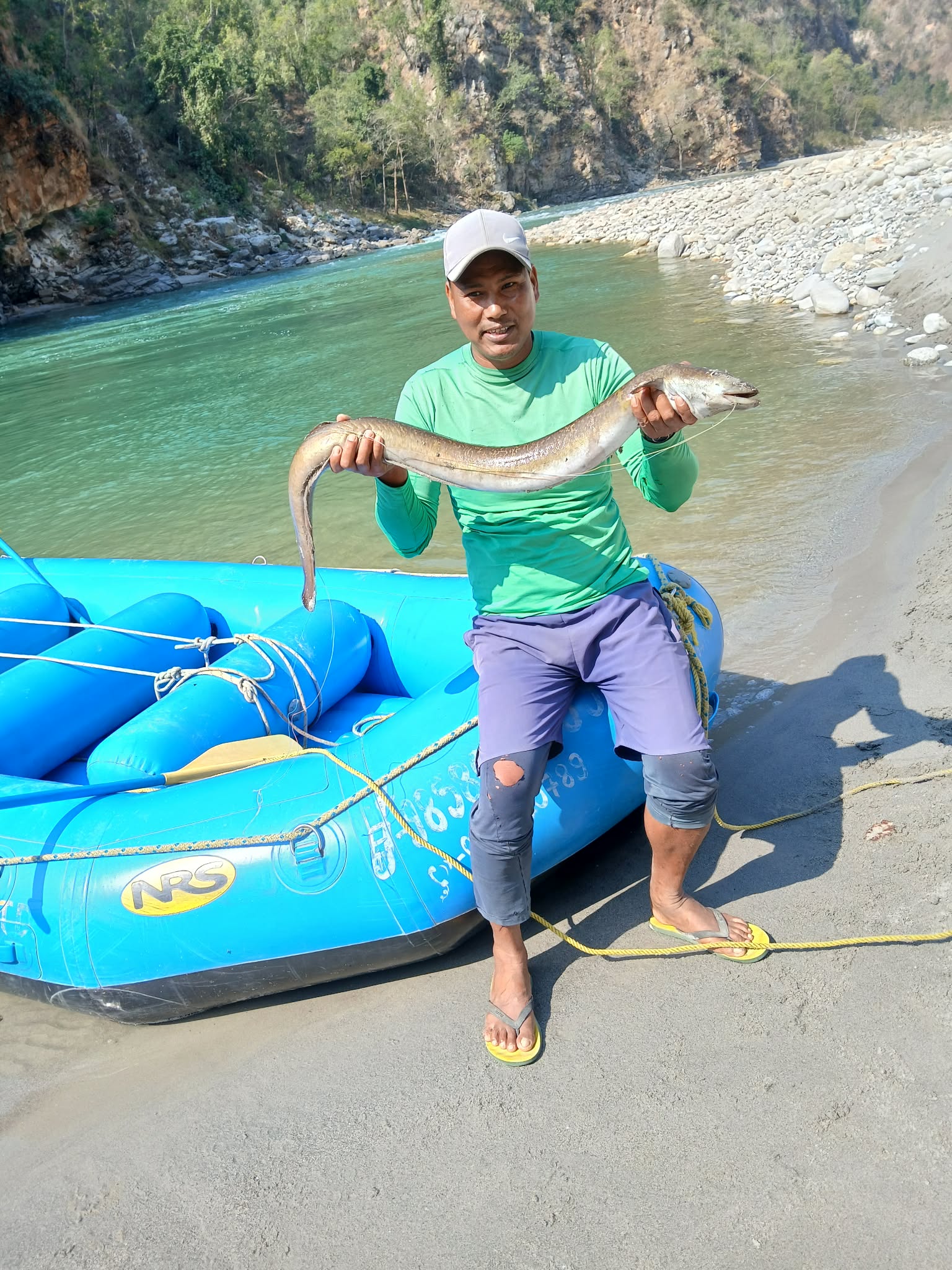
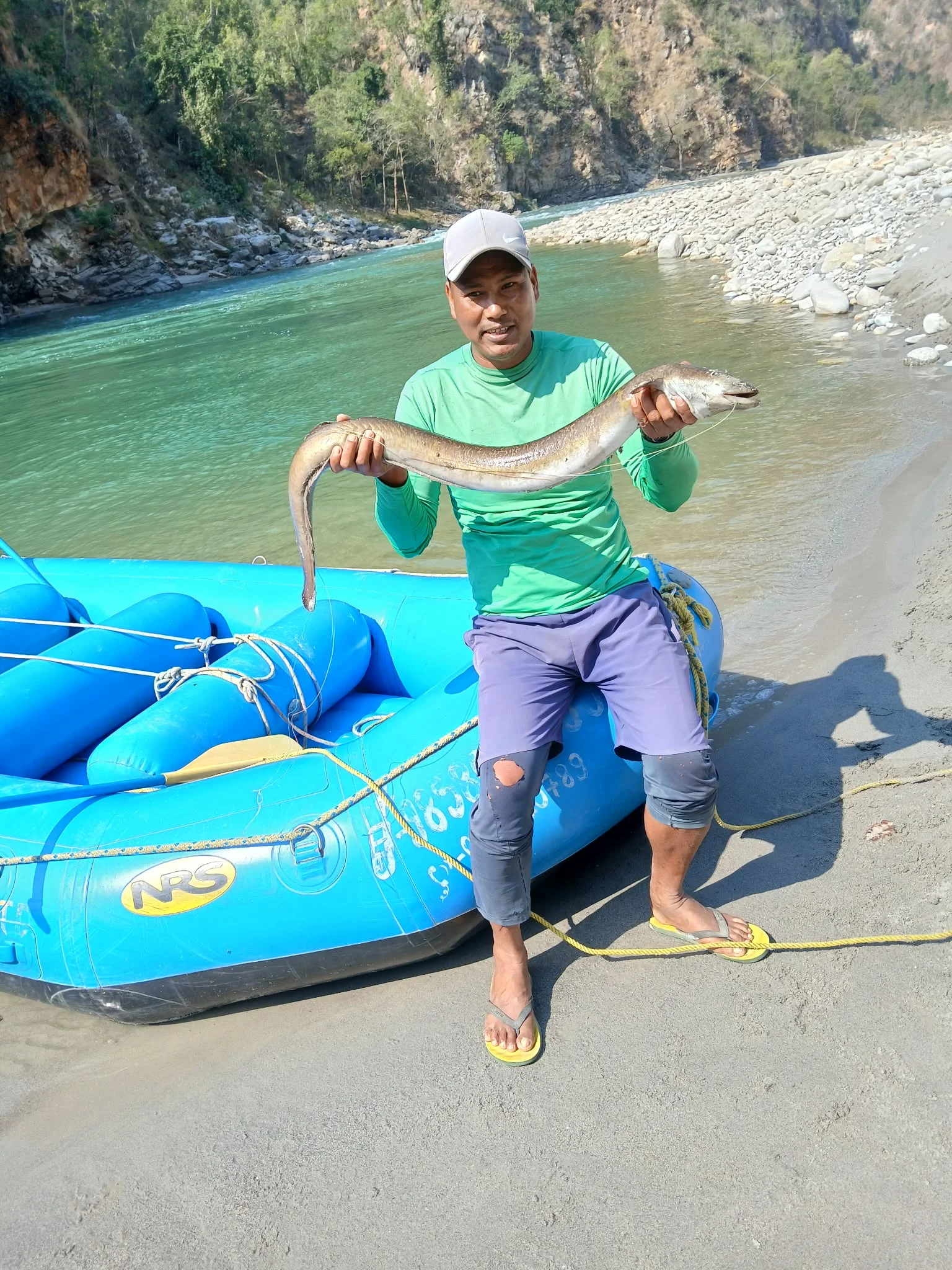
The Indian Mottled Eel, locally known as Raj Baam in Nepal, is a large catadromous species that migrates vast distances from Himalayan river systems to the deep oceans to spawn. Muscular and powerful, it is a secretive bottom dweller.
Habitat
Freshwater streams, deep rock pools, and muddy substrates of mid-hill and lowland river systems. Catadromous lifecycle.
Diet
Carnivorous bottom predator; hunts at night for small fish, frogs, crabs, worms, and organic detritus.
Targeting the Species
Mainly targeted during night angling sessions. They are extremely muscular and slippery. Once hooked, they will spin and try to anchor themselves under boulders, requiring immediate pressure to land.
Effective Techniques
Gear Recommendations
Rods
Medium to Heavy action rods (2.5-3lb test curve).
Lines & Leaders
15-30lb monofilament or braid lines with abrasion-resistant leaders.
Lures / Flies
Large earthworms, shrimp, or small cut-bait chunks.
Terminal Tackle
Standard sliding sinker rig with strong circle hooks (size 2/0 - 4/0).
Photo Gallery


Frequently Asked Questions
How does the Mottled Eel migrate? expand_more
Are they active during the day? expand_more
Plan an Expedition
Join our specialized expeditions designed to track and catch Indian Mottled Eel.
Vital Statistics
Key species metrics
Peak Season
Autumn & Monsoon
Post-monsoon (October–November) when water clarity settles, or spring (March–April) as water temperatures rise.
Lifespan
6 to 11 Years
Adults mature in 5 to 11 years, spawn once in the sea, and die.
Maximum Size
Up to 2.0 Meters
Typically averages 80-120 cm in length, weighing up to 6 kg, with record specimens up to 20 kg (44 lbs).